Beginning Learner's Russian Dictionary: Anki Flashcards
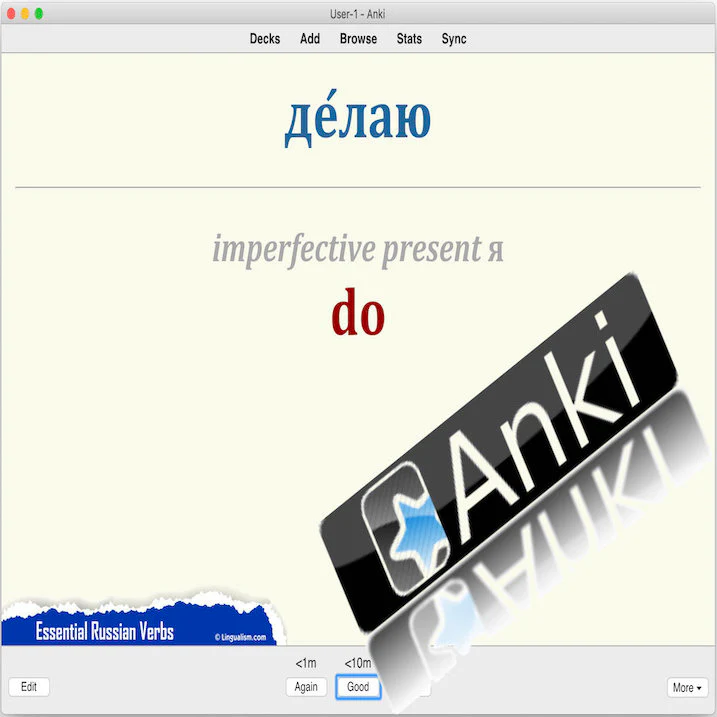
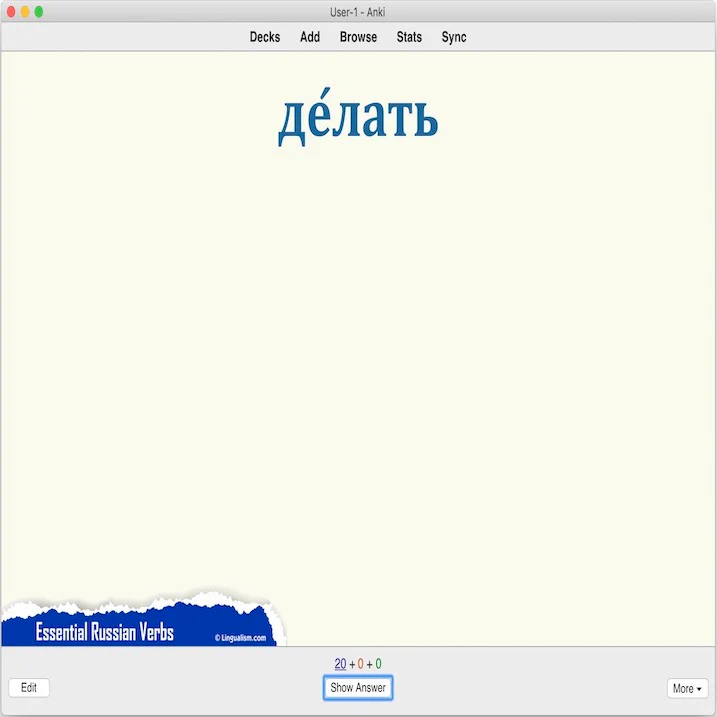
As shown in the video, each flashcard presents a Russian word (with its part of speech), followed by a card that uses the word in an example sentence. Later, English-first cards test your ability to recall the Russian equivalent.
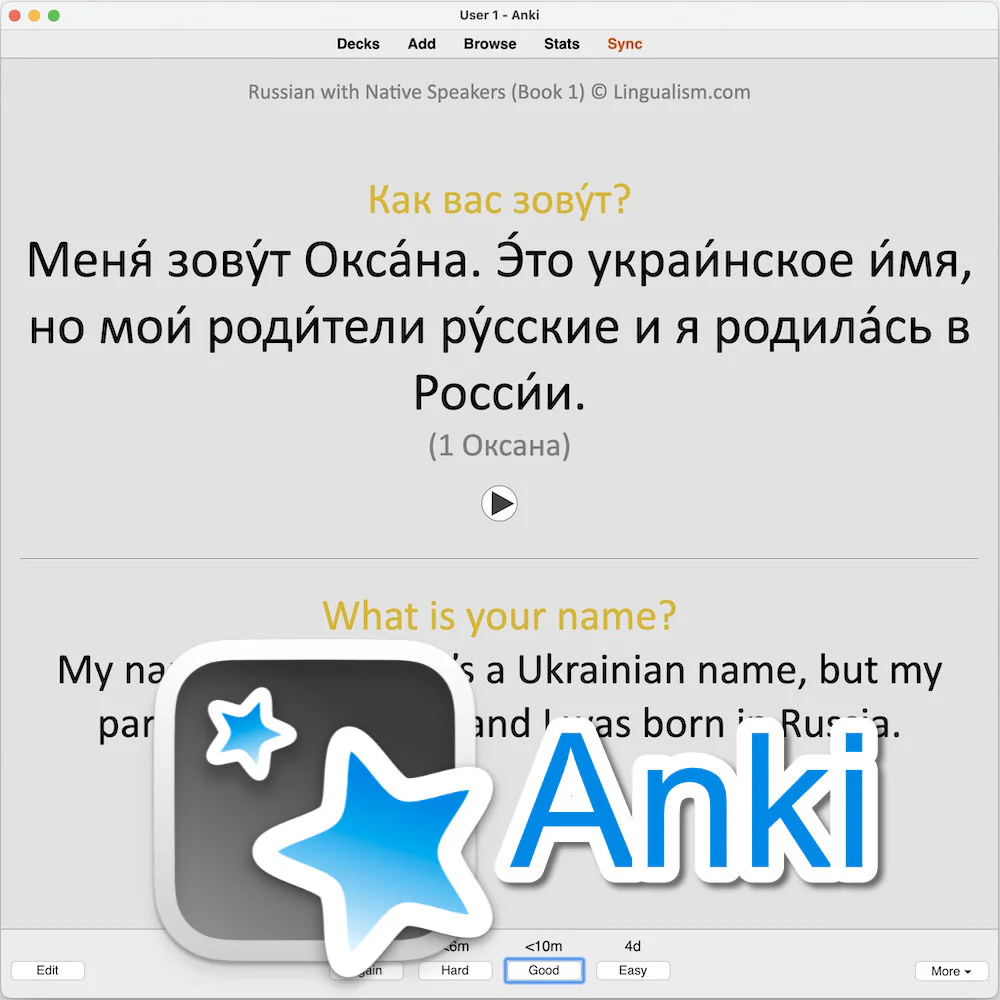
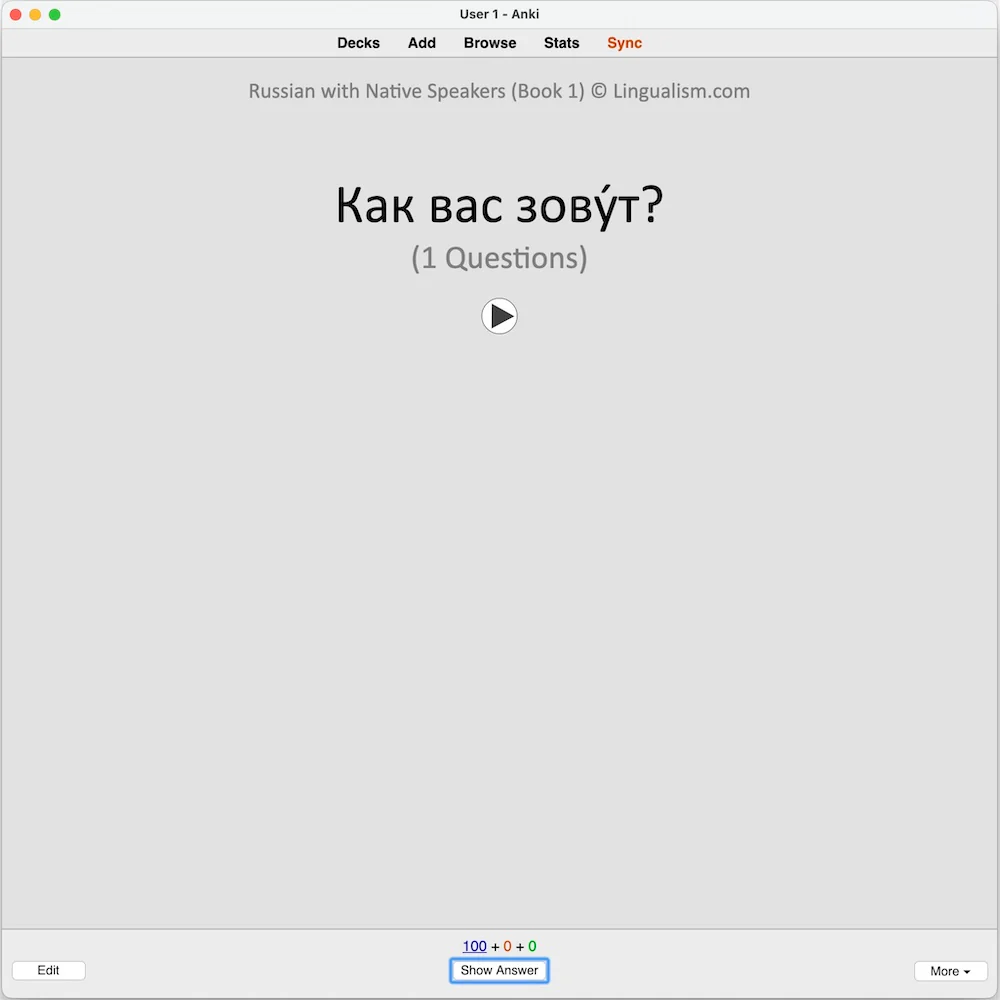
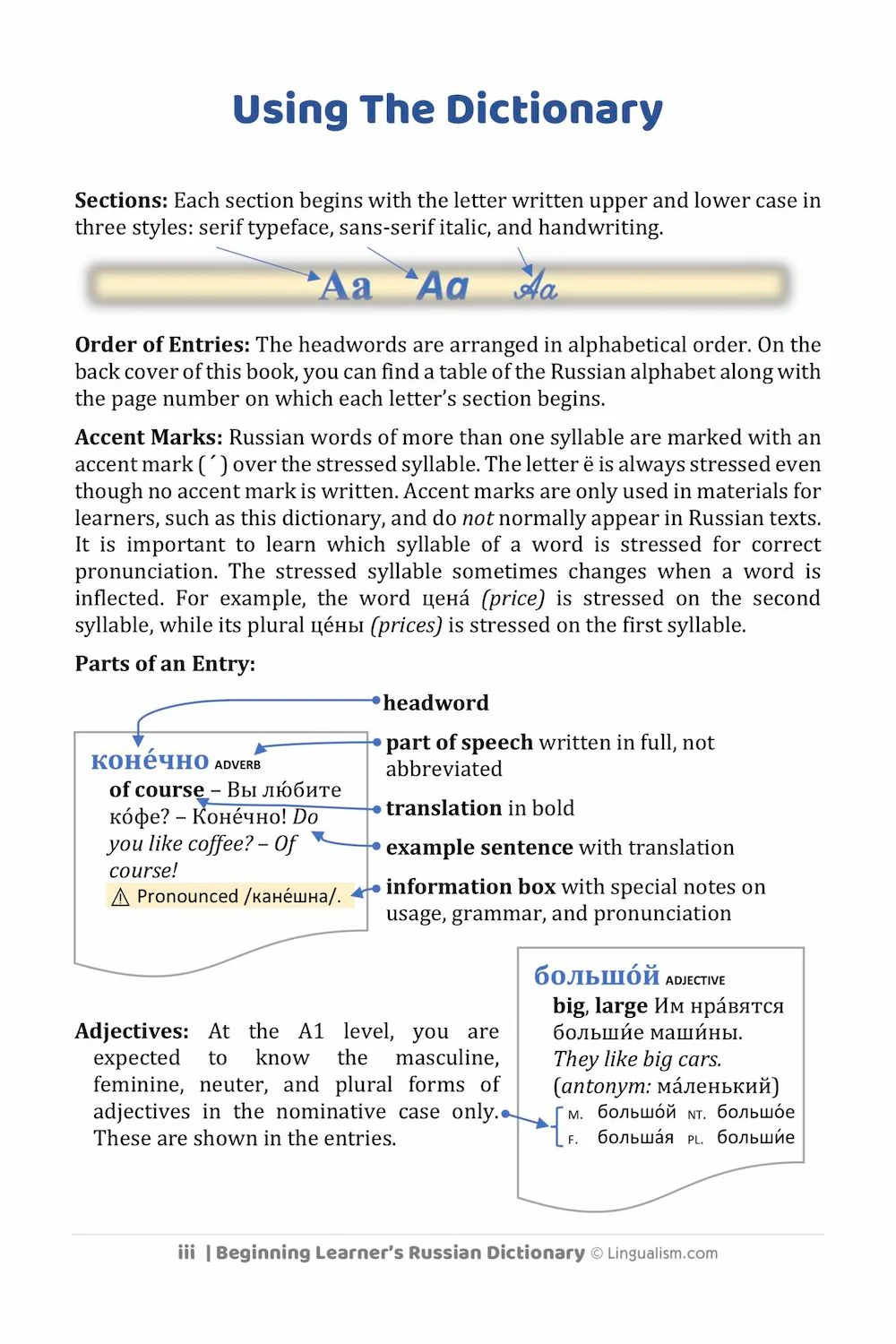
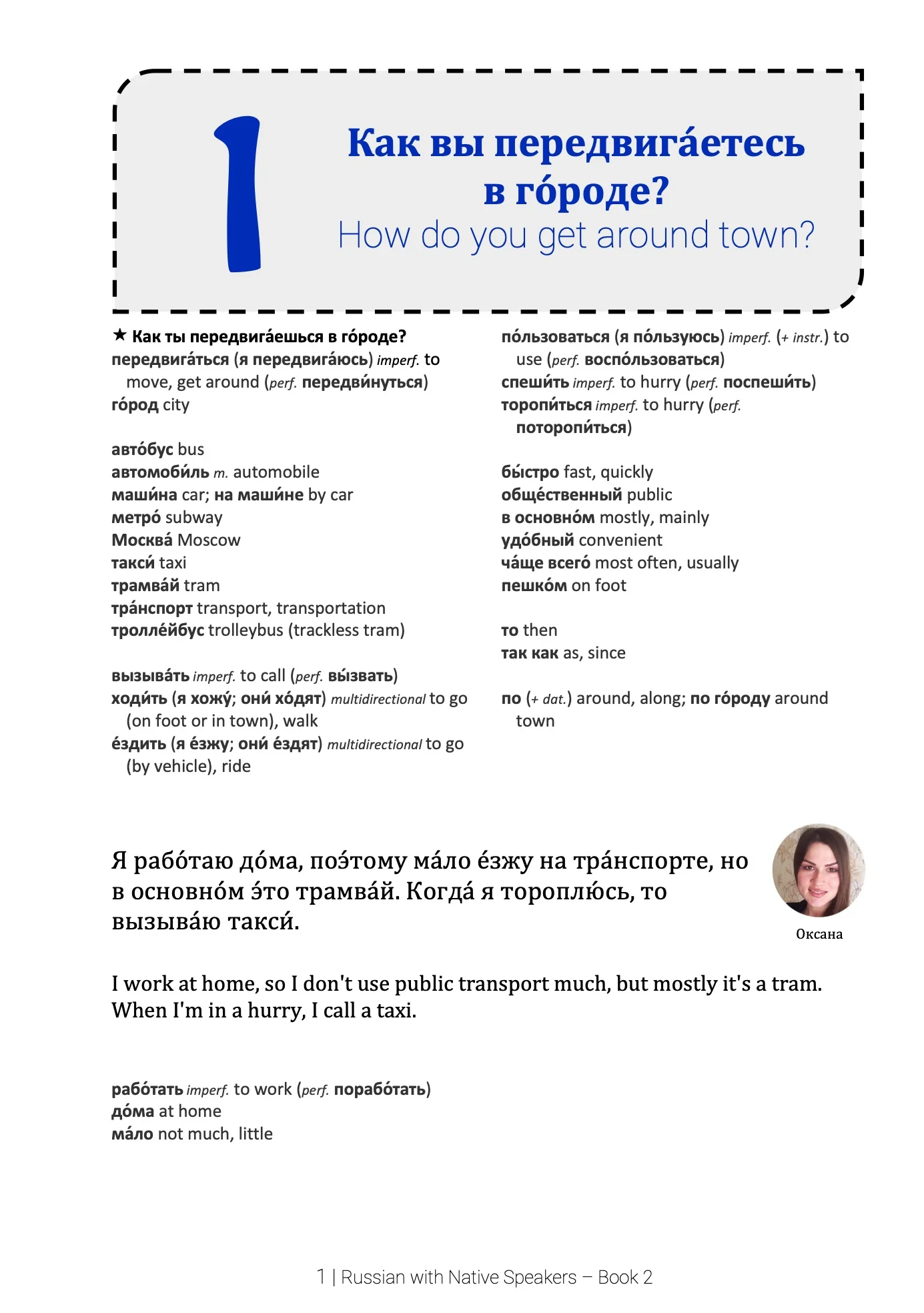
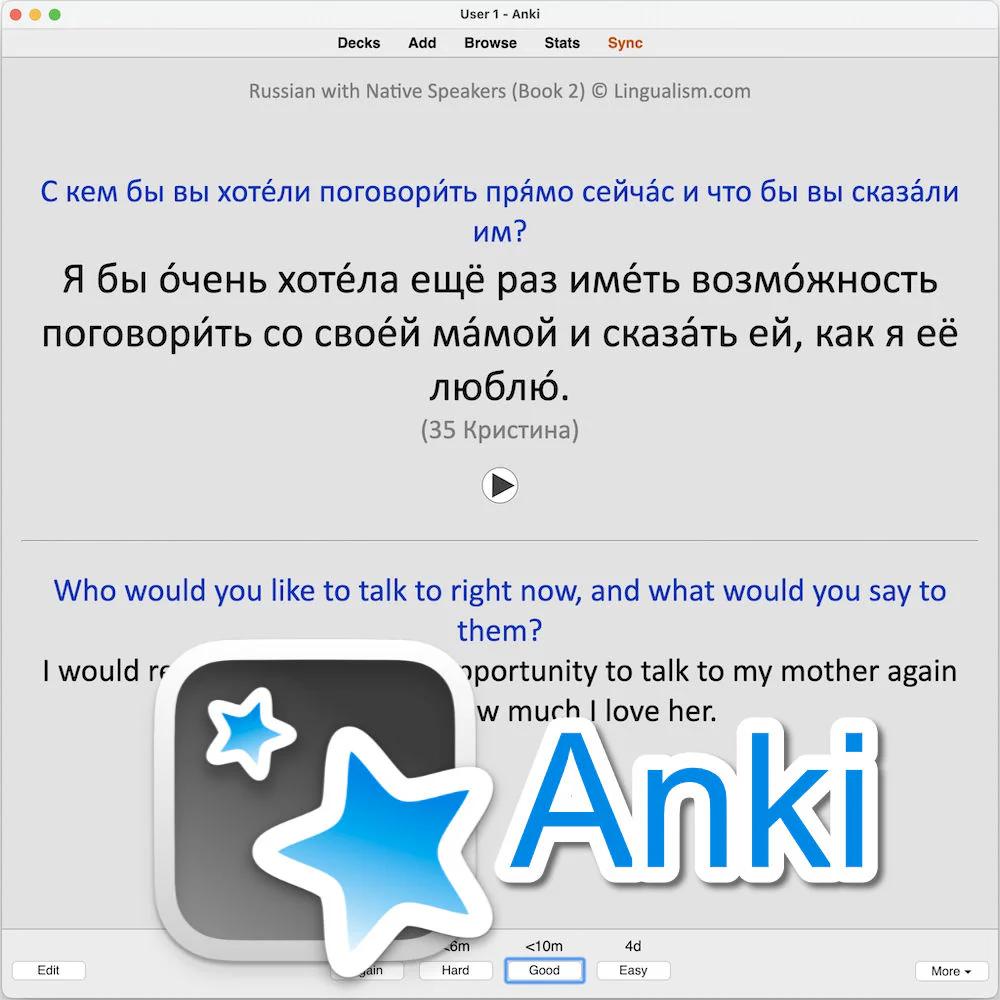
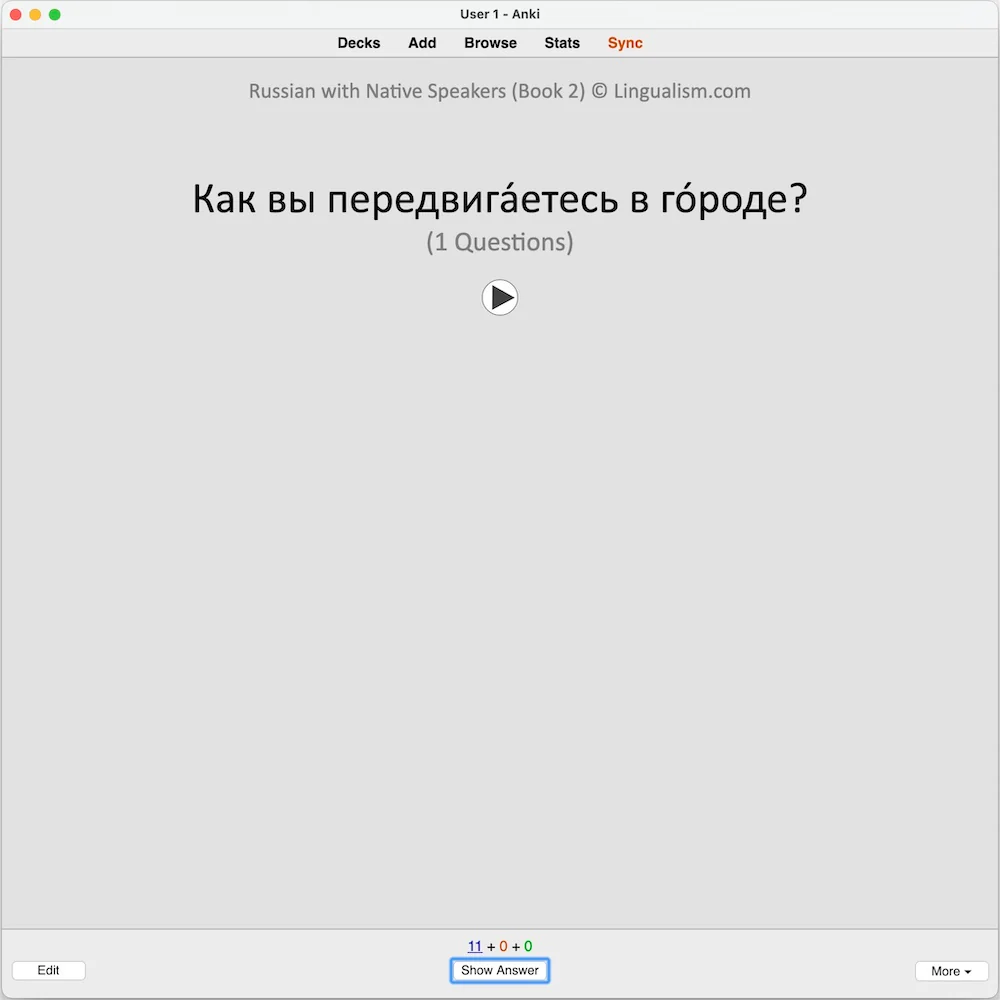
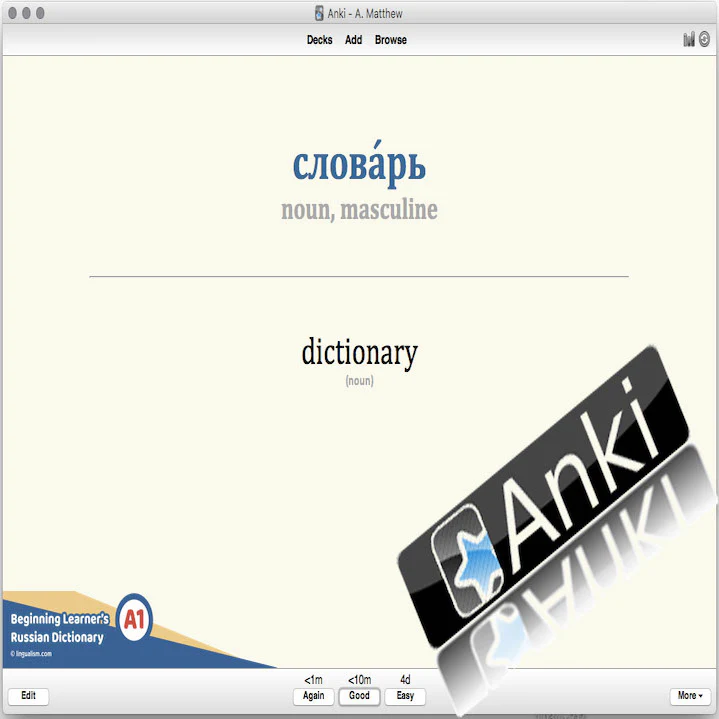
With over 2,000 flashcards, this Anki deck includes all of the headwords from The Beginning Learner’s Russian Dictionary. The deck also features reverse cards, bringing the total to more than 4,000. These reverse cards show the English translation first, helping you assess how well you can recall the Russian. See the sample images for an overview of the card layouts.
Each card includes audio recorded by native speakers of Russian to reinforce pronunciation and listening comprehension.
How to Study
- Alphabetical order: By default, cards appear alphabetically. Each headword from the dictionary is followed by its example sentence(s).
- Random order: To randomize the order, open Options and set new cards to “show in random order.” You’ll see both headword and example cards. To focus only on headwords, suspend all cards tagged “example.”
- Only specific words: You can focus on selected words by suspending all cards, then unsuspending only those you want to review. To suspend all cards: Browse → Current Deck → highlight all cards → Suspend. Then search for the desired words and click “suspend” again to unsuspend them. If accent marks prevent search matches, install the Anki add-on Ignore accents in browser search (code: 1924690148). For additional search tips, consult the Anki manual.
Additional Notes
Names: Personal name cards are suspended by default, as they may not be essential for most learners. To include them, search for the tag “name” and unsuspend.
Informal “You”: On English-Russian cards, you won’t know in advance whether the translation uses the informal singular ты or the formal/plural вы. When the informal pronoun ты is used, it is marked with an asterisk (*).
Product Information
Product Information
Shipping & Returns
Shipping & Returns
Description
As shown in the video, each flashcard presents a Russian word (with its part of speech), followed by a card that uses the word in an example sentence. Later, English-first cards test your ability to recall the Russian equivalent.
With over 2,000 flashcards, this Anki deck includes all of the headwords from The Beginning Learner’s Russian Dictionary. The deck also features reverse cards, bringing the total to more than 4,000. These reverse cards show the English translation first, helping you assess how well you can recall the Russian. See the sample images for an overview of the card layouts.
Each card includes audio recorded by native speakers of Russian to reinforce pronunciation and listening comprehension.
How to Study
- Alphabetical order: By default, cards appear alphabetically. Each headword from the dictionary is followed by its example sentence(s).
- Random order: To randomize the order, open Options and set new cards to “show in random order.” You’ll see both headword and example cards. To focus only on headwords, suspend all cards tagged “example.”
- Only specific words: You can focus on selected words by suspending all cards, then unsuspending only those you want to review. To suspend all cards: Browse → Current Deck → highlight all cards → Suspend. Then search for the desired words and click “suspend” again to unsuspend them. If accent marks prevent search matches, install the Anki add-on Ignore accents in browser search (code: 1924690148). For additional search tips, consult the Anki manual.
Additional Notes
Names: Personal name cards are suspended by default, as they may not be essential for most learners. To include them, search for the tag “name” and unsuspend.
Informal “You”: On English-Russian cards, you won’t know in advance whether the translation uses the informal singular ты or the formal/plural вы. When the informal pronoun ты is used, it is marked with an asterisk (*).